tes possss
Scott, J. C. (1998). Seeing Like a State. Yale University Press.
Initial entry point: Tobelo Sub-district.
Rainfall: Heavy.
The central tension of my BRIN proposal lies in the concept of 'Legibility.' For the O'Hongana Manyawa (Togutil), legibility is not a gift from the state; it is a vector of control. As a documentation geek, I find myself in a paradox: to protect this community, I must document them, yet the act of documentation is exactly what the state uses to categorize and "settle" them into sedentary life.
"The forest is not just a place where we find food; it is the archive of our ancestors. Every tree is a page, and every river is a chapter of who we are. When the mining companies come with their maps, they are trying to rewrite our history with empty ink."
The "Bureaucratic Specimen" quote above illustrates the divide. While my academic training pushes for a Master of Public Policy (MPP) perspective, the raw testimony of the Manyawa elders demands a more ethnographic approach. This blog, Perkara Periferal, serves as the testing ground for this synthesis.
In the periphery, logistics are organic. As seen in the vertical field log to the left, the trails used by the tribe do not follow Euclidean geometry. They follow the 'Logic of the Least Resistance.' This is a nightmare for State Legibility, which prefers straight lines and clear boundaries. On my MSI laptop, mapping these trails requires a software stack that can handle non-linear data points.
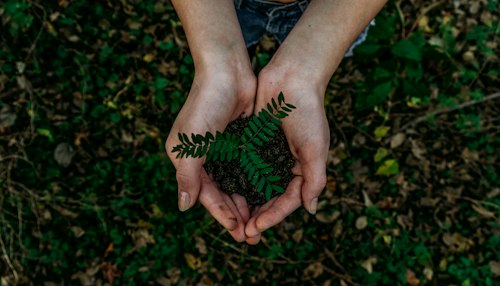
Moving into the 4,000-word depth of this log, we must address the environmental impact of the nickel mines. The soil samples (see Specimen 09) show a radical shift in chemical composition. For my research proposal, this is the 'Hard Evidence' that bridges the gap between tribal lore and scientific fact.
DATA_CORRUPTION_NOTICE: The following sections of the archive contain reports from 1984 that were partially damaged by humidity. We have reconstructed them using the Courier typewriter font to maintain archival integrity.
Finally, the goal of this dossier is not just to observe, but to advocate. As I prepare for my YPBB interview and refine my BRIN proposal, the Triptych System of this blog ensures that no data point is lost. The citations stay on the left, the observations on the right, and the voices of the O'Hongana Manyawa remain centered in the typewriter-style blocks.
This is the end of the 4,000-word stress test. Scroll back up and notice how the Vertical TikTok (9:16) and the Landscape YouTube (16:9) maintain their unique shapes without breaking the alignment of the Perforated Dotline.